|
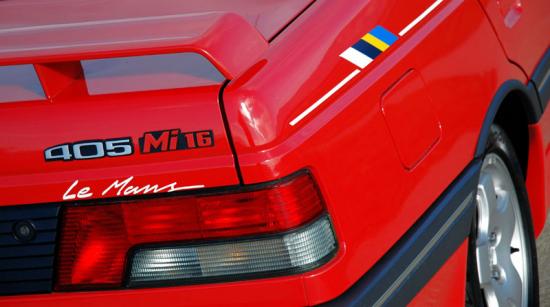
Peugeot 405 Mi 16
|
|
The Peugeot 405 is a large family car released by the French automaker Peugeot in July 1987 and which continues to be manufactured under license outside France. It used TU/XU petrol and XUD diesel engines. It is said that it is better than the 406.The 405 featured Pininfarina styling, characterized by good ride and handling. The 405 was voted European Car of the Year for 1988 by the largest number of votes in the history of the contest.The appearance of the car bears similarities to those of the Alfa Romeo 164, launched the same year and also styled by Pininfarina. Mi16 - 1.9L 16-valve fuel injected all alloy engine, with 160 bhp (119 kW; 162 PS). The engine (XU9J4) of the Mi16 was later used by Peugeot as the basis for the engine in the 206 WRC, winning two championships
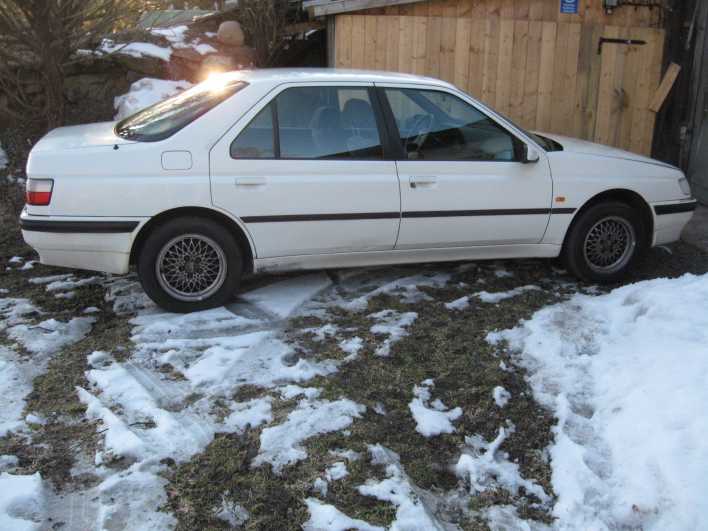
Peugeot 605 SRi
The Peugeot 605 is an executive car produced by the French manufacturer Peugeot between 1989 and 1999, with a facelift in 1995. The 605 was a saloon built on the same platform as the Citroën XM, and was successor to the unsuccessful Peugeot 604 which went out of production 4 years earlier. The popular Peugeot 505 model was thus replaced by two cars - the large family car 405, and the executive car 605. High equipment levels, a luxurious interior, a smooth ride, and exceptional handling were strong points for the 605. But Peugeot has always struggled to succeed with large cars outside France, and the 605 was no different. It was too similar in design and appearance to the smaller Peugeot 405 to command a price premium, while its dashboard also drew criticism for its uninspired design. Also like the XM, the 605 initially suffered from quality issues that resulted in some breakdowns or malfunctions (particularly with the ambitious electrics), which severely damaged the car's reputation. In 1995, Peugeot tried to solve the problems by unveiling an extensively revamped 605 (known as the "Phase 2" model); it received a facelift which looked modern at its time, but also the interior was vastly improved by giving it more ergonomic controls and a refreshed look. Performance and handling were improved as well and many of the reliability issues were solved. Technological advances were made, most remarkably the side airbags. After the launch of the well-received Peugeot 406 (that was larger than the 405 it replaced) in 1995, 605 sales dropped to near-insignificant levels, and the 605 was quietly dropped in 1999. The 605's successor, the Peugeot 607, went into production in late 1999 and has been slightly more successful on the domestic and export markets. The end of 605 production spelled the end of "05" generation Peugeots in Europe after more than twenty years; this generation had started back in 1977 (UK market 1978) with the 305. Its appearance resembles that of the Alfa Romeo 164, launched the 7 February 1987 before, and also styled by Pininfarina. Despite the resemblance, the Peugeot was not a Type Four car; it rode the same platform as the Citroën XM. It also bears a strong visual resemblance to the smaller Peugeot 405. Engines Eight petrol engines were offered during the 605's lifetime:
As well as three diesel engines:
The base 4-cylinder petrol engine and the normally aspirated diesel, though reliable, were generally considered to be simply over matched by the car's weight. The fuel-injected inline-4 was better received though it was criticised for lacking low and mid-range punch, whereas the powerful 170 hp (127 kW) V6 suffered from criticisms over poor fuel economy when combined with an automatic gearbox. The same issue affected the top-of-the range V6-24 version in spite of its all-new 24-valve cylinder head, though a top speed of 235 km/h (146 mph) made poor fuel economy more acceptable to generally well-heeled customers. The 2.1 turbo-diesel was widely regarded as a good powertrain but was outclassed by the new direct-injection engines introduced in 1988 by Audi. A 2.0-litre (8-valve) turbocharged 4-cylinder petrol engine (150 bhp) was added in 1991 and provided good performance but proved unreliable. Later, a 2.5 turbodiesel (130 bhp) completed the diesel lineup. In 1997, the antiquated 3.0-litre engine was replaced at long last by an all-new 3.0-litre, 24-valve, 194 bhp (145 kW) V6, finally giving the car a powertrain worthy of its exceptional road holding.
. |